Featured
Table of Contents
Ashlei Petion, a qualified professional counselor (LPC) and assistant teacher of medical mental health therapy at Nova Southeastern College in Florida, noticed a common pattern in the counseling work she did with teens throughout her master's internship. Her young clients would often chat in sessions concerning obstacles and friction in your home, but whenever Petion looped the customers' parents into the discussion, they stated they were merely parenting their kid in the very same ways their own parents had finished with them.
For some customers and therapists, societal fascism and historical/cultural erasure might keep them from linking offering issues, such as difficulty in partnerships or troublesome coping, to obstacles or trauma that customers have not experienced themselves, but which affects their family members and neighborhood, Goodman notes.
Beginning Your Therapeutic Journey
There's just no way a counseling program can cover everything completely, including the complexities of injury, in a two-year master's program, she states. Additionally, much of the books and materials counselor education and learning programs make use of to instruct trainees regarding trauma have a Western point of view and do not cover historical and generational trauma, she adds.
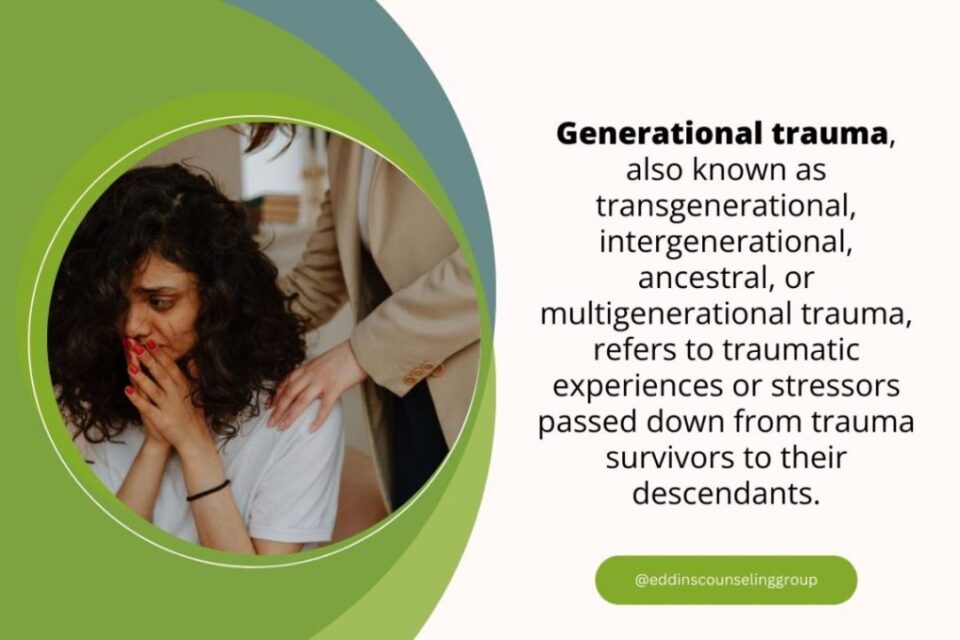
Generational trauma is a location of research study for Mike, a third-year doctoral candidate in counselor education and guidance at the College of Florida, however it's likewise something he personally experienced maturing as a Black man. He says he also sees its effects in the problems of the students, faculty and staff he counsels at Vanderbilt.
The core is to reveal where these sensations originate; if it's something that they've internalized from their household or area, after that it can indicate they have generational trauma that needs to be resolved, Mike says. A customer who shares concern or suspect of legislation enforcement or medical care might not have a personal experience that motivates that anxiety.
Generational Trauma in First-Generation Families

She guides these customers to talk about their family members of beginning, and where their feelings of pity might have come from. Customers who are influenced by generational trauma commonly locate that they stem from social messages they have actually internalized, Guyton says.
They might need you to demonstrate that you are someone that can be relied on, someone who will believe them," says Goodman, an ACA member and representative on the ACA Governing Council. Goodman notes that some customers may want to do a deep dive into refining the historical origins of their trauma while others might merely desire to recognize it and concentrate on other job, such as learning coping tools for daily life.
"The objective is for our clients to be able to live the life they wish to live," Goodman proceeds. "It's not up to me to tell them they have to revisit their whole household history. I want figuring out what 'living a purposeful life' suggests for each client and assisting them obtain there." Guyton, an ACA participant and co-author of the workbook Recovering the Injuries of Generational Trauma: The Black and White American Experience, has had clients that took a trip to speak with expanded household members to find out even more concerning the injury, context and life stories of their forefathers, whereas others are not comfortable doing so.
How Psychological Challenges Manifest Differently Across Cultures
"There is normally a connection to what it is to be an American and how they really feel as an American." The field of epigenetics, she adds, educates us that the historical trauma responses can be passed down to next generations. Therapists may likewise require to work on numerous challenges with these clients at when, Guyton says.
Once it surface areas, I concentrate on it as high as the client leads and wait till they're all set to refine it. I wish to likewise be sensitive to the other sorts of trauma" they're taking care of, she explains. Guyton has developed a method that makes use of a mix of cognitive behavior modification, narrative treatment, genogram and some assisted images work to help customers recognize the generational trauma being given to them and get the abilities to interrupt transmission to the future generation.
The circumstance left a lot of the parents with extreme feelings of shame, concern and generational injury, Goodman states. Subsequently, these parents and their children were coping with generational injury as they battled to preserve family members bonds, she adds. She located that these parents wished to discover parenting abilities in counseling to satisfy their prompt requirements and sustain their youngsters, however they also needed much deeper work to refine the injury of their experience at boarding institution, where they weren't allowed to speak their indigenous language or wear their indigenous gown and, in many cases, experienced abuse.
Culturally Adapted Treatment Approaches
At intake, check out not only their trauma history and challenges yet likewise their staminas, resources and things that provide them really hope, she recommends. Therapy to help customers acknowledge and unbox their generational trauma must be culturally sensitive and tailored to each customer's various combination of demands.
Mike locates that it can be handy to start discussions by motivating customers to take into consideration the "wonder inquiry" and visualize or visualize a globe where their obstacle or issue (in this case, generational trauma) is completely eliminated. He suggests asking the client, "What would it be like if you really did not hold on to these feelings, or this pressure had not been there?" to trigger thought and discussion regarding the large picture and bigger problems connected to their challenges.

Latest Posts
Accelerated Retreats vs Traditional Treatment: Which Option is Best for You
Cultural Values and Sexuality
Breaking Down Obstacles to Culturally Competent Care